Is Your Microsoft Environment Ready for Copilot and AI?
Your employees already have new AI coworkers.
3 min read
.png)
In 2020, small businesses scrambled to manage a sudden shift to remote work as pandemic restrictions forced us to change the way we work. Plans—and mistakes—were hastily made. Ad-hoc solutions were implemented and IT departments, if they existed, were stretched far beyond their limits.
As the dust settles after the largest public health crisis of our lives to date, many small businesses are realizing they are never going back to “normal.”
Instead, most organizations have concluded that instead of a full-time return to the office, a hybrid workplace is the best way forward.
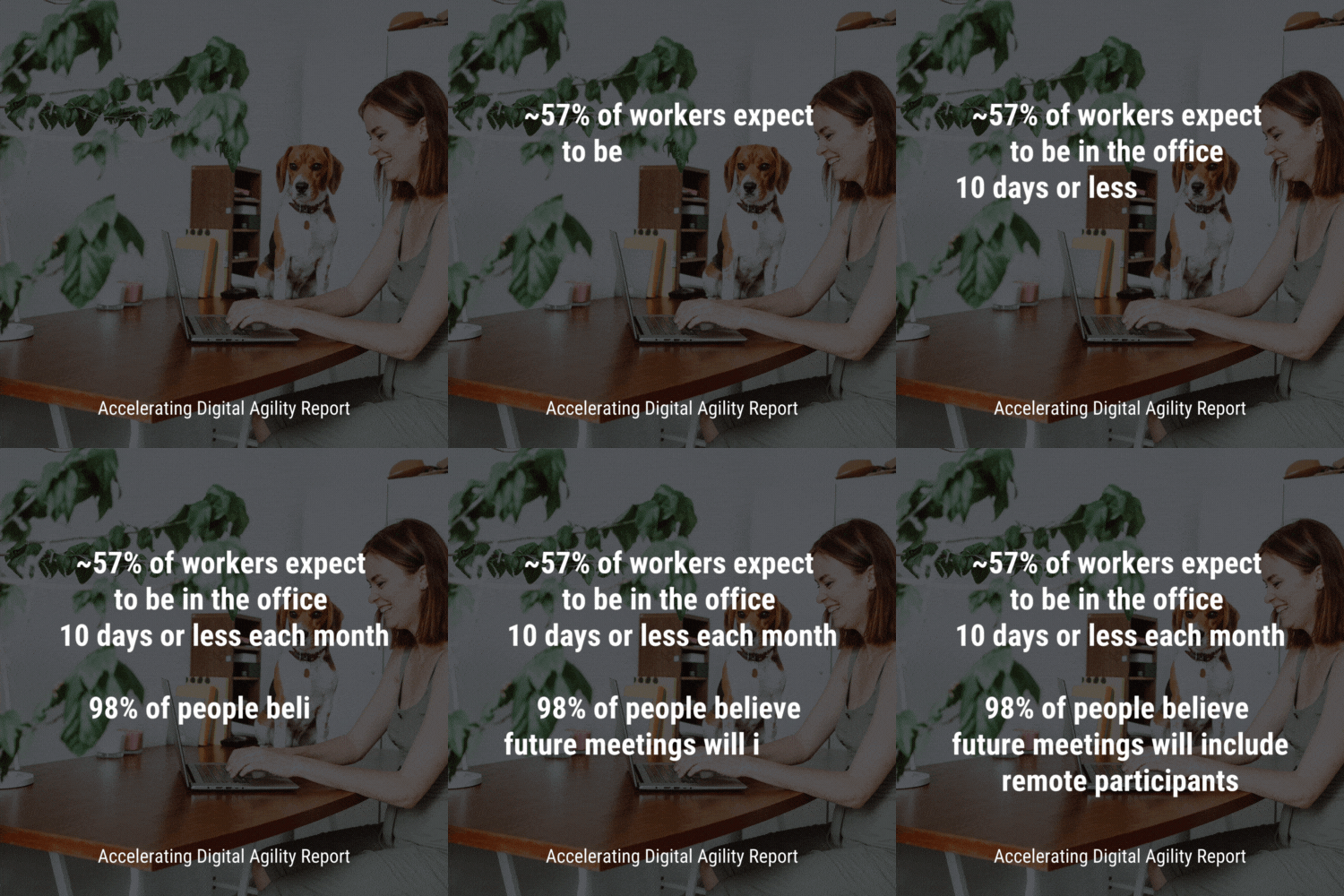
While a hybrid workplace is a necessary shift to meet the changing needs of the modern workforce, it can also create costly security vulnerabilities.
The most significant change organizations have experienced since pre-pandemic is that their information is now predominantly in the cloud rather than inside a firewall-protected physical office or data center.
With data moving to the cloud and increased remote work, small businesses now have more mobile devices and employees are working from more locations. While that’s good news for employees who can access this data wherever they choose to work, it also means you have more points of risk to think about.
As teams work both remotely and in the office, the boundaries between work and home begin to blur. The reality is that some team members will also use home devices and networks for work purposes, which doubles the number of endpoints that malicious actors can attack.
Personal devices are more likely to be lost and may have minimal security installed—or worse, none at all. Plus, phishing, ransomware, and social engineering attacks have become more sophisticated and harder than ever before to recognize.
-1.png)
Organizations believe that if they invest in the right technology, their business and data will always be protected. However, the platforms you use will only work as well as your team has been trained to use them.
Conducting training to change employee behavior, attitudes, and security habits is a necessary investment for all small businesses. This is more challenging in a hybrid workplace as “1 in 3 remote workers admit they feel overwhelmed by the need to keep track of all their account credentials, it is easy to see how apathy, short attention spans, and bad cyber habits are the true adversary of a secure network.”

For hybrid workers especially, security and productivity must go hand-in-hand. If remote work security policies cause frustration and wasted time for employees, they will simply work around them.
Without employee education and participation, even the most robust security methods aren’t useful or effective. Employees working from home or from shared spaces like coffee shops, airports, or libraries must be able to stay compliant with security policies without interrupting their workflows. Businesses that are serious about maintaining security when employees work both remotely and in the office must choose productivity software with built-in security with neither feature treated as an afterthought.

If you’re currently relying on a patchwork of solutions, there could be dangerous gaps in your cyber defenses. This checklist can help you identify an all-in-one solution that can deliver productivity and peace-of-mind while eliminating the IT security problems you’re facing today. The right secure remote work software solution for forward-thinking businesses will:
Include advanced threat protection and security features that help stop phishing and ransomware attacks, enable multi-factor authentication and conditional access and restrict the movement of sensitive data.
Give you (at least) the following essentials: email, calendaring, mobile document creation and collaboration, team communication, and file storage and sharing.
Work from anywhere that your employees choose to work, and from a range of devices for companies with BYOD policies.
Provide built-in tools for managing and authenticating users, including role-based access control.
Enable multi-factor authentication for enhanced remote work security.
Help protect users from phishing and business email compromise (BEC) attacks.
Help protect users from malware attacks.
Allow for the implementation of a data loss prevention (DLP) policy that can help monitor the transmission of sensitive information and prevent it from ending up in the wrong hands.
Give users advanced collaboration tools, including video conferencing, whiteboarding, team chat, direct calling, recording and automated transcription options for meetings, and real-time document co-authoring.
Provide all of the tools your business needs with a layer of embedded security that doesn’t inhibit productivity.
Your employees already have new AI coworkers.
Security is no longer just about systems - it's about behavior
-Sep-29-2026-08-03-23-6586-PM.png)